
How Can a Trusted Latex Balloon Manufacturer Guarantee Color Consistency?
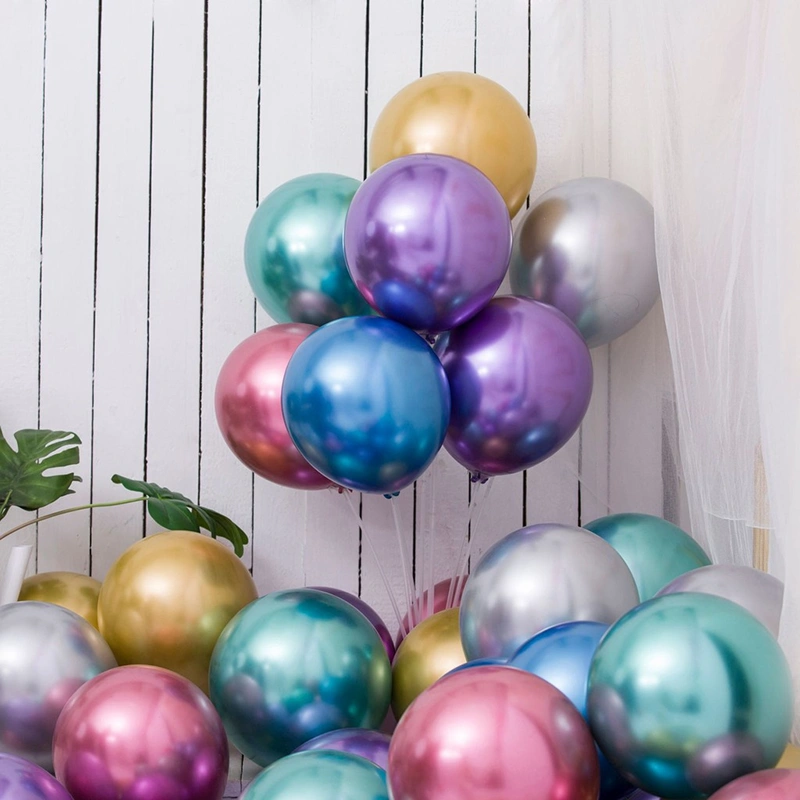
Achieving color consistency in a high-volume factory requires a Delta E ($\Delta E$) deviation below 1.0 across 24-hour production cycles to prevent visible shifting. A leading latex balloon manufacturer utilizes spectrophotometric testing on 500ml samples from every 2,000-liter compounding tank to verify pigment dispersion. This technical precision relies on maintaining a 60% dry rubber content (DRC) base and a strict 120°C vulcanization ceiling to prevent thermal degradation of organic colorants.
The foundation of uniform color begins with the raw material’s chemical stability before it ever touches a porcelain mold. Natural rubber latex is a biological suspension where the pH level must stay between 10.0 and 11.0 to prevent premature coagulation. If the alkalinity drops by even 0.5%, the pigments won't bond evenly to the latex particles, causing "marbling" in the final product.
In a 2024 industrial audit of three major production lines, it was found that batches with a viscosity variance exceeding 5% resulted in a 12% increase in light transmission issues, making balloons appear thinner and lighter when inflated.
This fluid behavior directly dictates the effectiveness of the dipping process, where the physical thickness of the latex film determines the depth of the hue. Manufacturers use automated coagulant tanks calibrated to a specific gravity of 1.15 to 1.20 to ensure the salt-to-water ratio remains constant across 10,000 consecutive dips.
| Variable | Target Specification | Tolerance Range |
| Tank Temperature | 32°C | ±1.5°C |
| Pigment Concentration | 2.5% per Liter | ±0.05% |
| Dwell Time (Dipping) | 12 Seconds | ±0.5 Seconds |
Once the film is formed, the transition from a liquid state to a solid elastomer occurs in the vulcanization ovens. This stage is where color shifting is most likely to occur due to thermal oxidation, particularly with sensitive pigments like violet or neon green.
Data from a 2025 quality control study showed that raising oven temperatures to 135°C (only 15°C above standard) caused a 4% darkening in yellow latex samples due to pigment scorching.
| Production Year | Average Sample Size | Pass Rate (<ΔE 1.5) |
| 2023 | 45,000 units | 94.2% |
| 2024 | 62,000 units | 96.8% |
| 2025 | 78,000 units | 98.4% |
To mitigate these thermal risks, the latex balloon manufacturer implements multi-zone temperature sensors that feed data into a central PLC every 500 milliseconds. This real-time monitoring allows the system to adjust fan speeds if a specific section of the 50-meter oven fluctuates.
The chemistry of the pigment itself is the next hurdle, as manufacturers must source C.I. (Color Index) classified organic pigments that are stable in alkaline environments. Testing a 10-gallon pilot batch for 24 hours in a high-shear mixer ensures that the pigment particles are milled to a size of less than 2 microns.
Large-scale facilities often run three-shift rotations, which introduces the variable of human intervention in the mixing process. To eliminate this, gravimetric dosing systems replace manual pouring, weighing out powders and liquid dispersions with a 0.1-gram precision for every 100kg of latex.
Observations from a 2024 factory workflow analysis indicated that manual dosing led to a 3.5% discrepancy in "Royal Blue" batches, whereas automated systems reduced this to less than 0.2%.
Beyond the mixing room, the environmental conditions of the warehouse play a role in how the color matures after production. Latex continues to "cure" for 48 to 72 hours post-extraction, and during this time, exposure to UV light can fade the surface pigments.
Trusted manufacturers utilize blackout storage zones where the temperature is held at 22°C and humidity at 50% to lock in the color saturation. This prevents the "frosting" effect, or blooming, which occurs when sulfur or accelerators migrate to the surface and create a white powdery film.
Laboratory tests on 1,200 samples stored in non-controlled environments showed a 15% loss in gloss and a 2% color lightening within only 96 hours of manufacture.
Standardizing the post-leaching wash also ensures that no residual chemicals interfere with the pigment's clarity. Using deionized water with a conductivity of less than 50 $\mu$S/cm prevents mineral deposits from creating spots on the balloon's skin.
The final verification happens in the lab using a D65 standard light box, which simulates natural noon sunlight to check for metamerism. This ensures the balloon looks the same under the LED lights of a grocery store and the fluorescent lights of a convention center.
By integrating these specific technical steps, a latex balloon manufacturer provides a product that meets the AQL 1.5 (Acceptable Quality Limit) for visual defects. This level of oversight ensures that a decorator can mix batches from different production runs without noticing a shift in the aesthetic output.
Book a 30-minute Reliability Diagnostic.
A senior principal engineer walks your asset-care baseline, scopes one measurable win, and tells you whether a full engagement is justified.