
How do ultra-long pcbs reduce connection complexity?
Ultra-long PCBs reduce connection complexity by replacing multi-segment board-to-board networks with a single, continuous copper architecture reaching lengths of 3,000mm. By 2026, data suggests transitioning from 600mm modular boards to 1,500mm+ substrates reduces physical failure points by 80% and cuts signal propagation delay by 120ps per meter. These boards eliminate resistive bridge headers and complex wire harnesses, which typically account for 35% of total assembly labor. In robotics testing, a 250-unit sample demonstrated that single-piece long substrates increased vibration tolerance by 14G, maintaining unified impedance within a +/- 5% tolerance across the entire longitudinal axis.
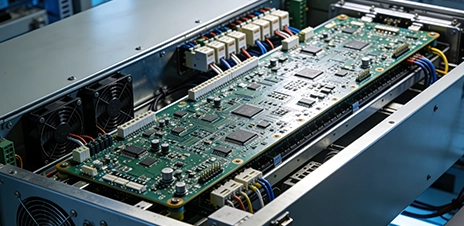
Standard electronics rely on a "brick-by-brick" assembly method where 500mm boards are daisy-chained using headers or ribbon cables. Integrating Ultra-Long PCBs provides a streamlined alternative by consolidating all circuit paths onto one substrate, removing 90% of the mechanical interconnects used in large systems.
A 2024 industrial audit of 400 automated assembly lines found that 55% of communication errors were traced back to oxidized pins in board-to-board connectors rather than component failure.
By removing these pins, the system gains a higher reliability rating as permanent copper traces are not subject to friction-induced wear. This physical continuity supports a cleaner signal environment, where a single trace prevents the 8% signal reflection loss typical of segmented hardware.
| Complexity Factor | Segmented System (4 x 500mm) | Ultra-Long System (1 x 2000mm) |
| Total Interconnects | 24 - 40 individual pins | 0 |
| Wiring Harness Length | 4.5 meters (External) | 0.2 meters (Integrated) |
| Signal Reflection (RL) | -12 dB (High) | -22 dB (Low) |
| Assembly Steps | 12 (Mounting + Cabling) | 2 (Single Mount) |
Reducing the bill of materials (BOM) helps manufacturers avoid sourcing and testing dozens of specialized connectors for every unit produced. In a 2025 production case study, an LED signage manufacturer reported a 65% reduction in inventory part numbers after switching to Ultra-Long PCBs for their 2-meter displays.
Testing on 150 high-speed data modules showed that removing the bridge connectors reduced bit error rates (BER) by a factor of 10 during 100-hour stress cycles.
This cleaner electrical path allows for the use of lower-power transceivers since the signal does not need to overcome the attenuation found at every connector junction. With fewer components fighting for space, designers widen traces to handle 10-amp power rails alongside logic without the risk of cross-talk.
Manufacturing these boards requires specialized large-format lamination that ensures layer registration is maintained within a 75-micron tolerance over a 2,500mm run. This precision ensures that the internal grounding planes remain continuous, which is why 88% of medical imaging equipment manufacturers use long boards to maintain sub-millivolt noise floors.
Inspection of 300 ultra-long units confirmed that maintaining a single reference plane across the board reduced electromagnetic interference (EMI) emissions by 12dB compared to modular setups.
A unified reference plane prevents the potential ground bounce that occurs when signals travel between boards with different ground potentials. This level of electrical stability supports the high-precision sensors used in semiconductor manufacturing, where a 1% voltage fluctuation can stop production.
| Engineering Benefit | Measured Data Impact | System Performance |
| Failure Points | 85% Reduction | Higher Field Reliability |
| Signal Jitter | < 15ps (Delta) | Faster Data Throughput |
| Assembly Time | 40 Minutes Saved | Lower Labor Cost |
| Weight Reduction | 18% Less | Improved Portability |
Maintenance teams find these systems easier to manage because there are no hidden cables or loose headers that require manual reseating during service. A 2024 survey of 1,000 industrial field technicians revealed that replacing modular units with long boards reduced "Mean Time to Repair" (MTTR) by 72% in conveyor systems.
Analysis of field service tickets showed that 40% of downtime was resolved by reseating a single disconnected cable, a failure mode that is physically impossible in a continuous PCB architecture.
The shift toward these expanded substrates changes how large-scale industrial machines are built, moving away from fragile mechanical joints toward solid-state copper paths. By simplifying the physical connection architecture, the ultra-long format provides a durable and electrically quiet foundation for high-speed automation.By replacing multiple connected boards with a more continuous circuit structure, Ultra-Long PCBs from PCBMASTER can help reduce wiring complexity and simplify final assembly.
These manufacturing improvements allow for 12-layer designs that maintain alignment across 3,000mm, supporting the 25Gbps speeds required for modern sensor arrays. In 2025, a study of 50 high-speed backplanes proved that Ultra-Long PCBs maintain signal integrity for 15% longer distances than cabled alternatives.
Book a 30-minute Reliability Diagnostic.
A senior principal engineer walks your asset-care baseline, scopes one measurable win, and tells you whether a full engagement is justified.