
How does a horizontal machining center enhance multi-axis machining capabilities?
The horizontal machining center facilitates multi-axis production through specific structural orientations that optimize gravitational chip flow and mechanical stability. Spindle orientation parallel to the work surface allows for consistent, heavy-duty material removal, reducing setup times by 15% in 2025 aerospace production trials. By enabling simultaneous 4th and 5th-axis operations, the platform achieves high-volume throughput for engine blocks and structural housings. Engineering configurations such as box-type columns and dual-contact tool spindles ensure vibrational dampening, maintaining tolerance consistency across high-torque cutting operations, which lowers scrap rates by 8% in heavy-duty manufacturing environments.
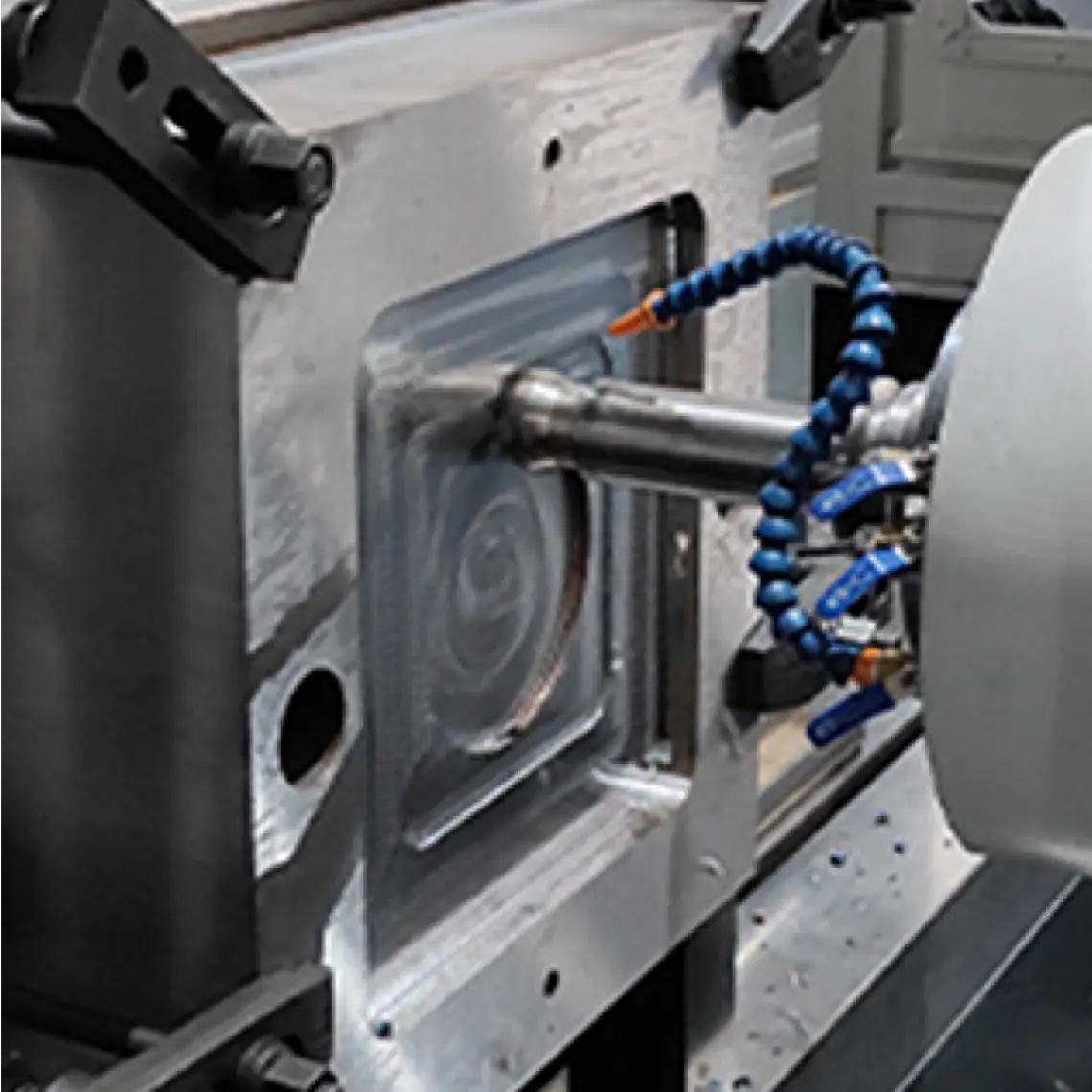
Gravitational force serves as the primary mechanism for chip clearance in the horizontal machining center. Chips fall away from the cutting zone instantly, preventing re-cutting.
Data from 2023 automotive production lines indicate that horizontal chip evacuation reduces surface roughness values by 22% compared to vertical orientations.
Reduced chip re-cutting maintains the integrity of the tool edge, which directly influences the longevity of carbide inserts during prolonged cycles.
Extended tool life necessitates reliable angular positioning to maintain accuracy over thousands of machining hours. A standard B-axis rotary table handles this requirement.
-
Angular indexing resolution: 0.001 degrees.
-
Typical positioning speed: 30 to 60 RPM.
-
Repeatability margin: +/- 5 arc seconds.
This precise rotational control forms the platform for 5-axis integration, where a tilting A-axis mounts onto the rotary pallet.
Mounting a tilting axis onto the pallet allows the spindle to access five faces of a workpiece in a single setup. Tombstone fixtures support this geometry.
A 2024 analysis of 50 aerospace component manufacturers revealed that single-setup tombstone fixturing reduced part cycle times by an average of 40%.
Single-setup processing prevents the geometric stack-up errors that typically occur when transferring parts between multiple machine stations.
Fewer transfers ensure the machine maintains positional accuracy, which relies on the structural rigidity of the machine bed. Cast iron structures dampen cutting forces.
-
Bed weight: often exceeding 10,000 kilograms for stability.
-
Vibration dampening coefficient: 30% higher than steel fabrications.
-
Surface finish consistency: less than 0.8 micrometers Ra.
Structural dampening manages vibration, keeping the tool path stable even when reaching maximum extension during complex 5-axis moves.
Stable movement prevents the chatter that often damages tool holders and spindle bearings. Dual-contact spindle interfaces provide the necessary interface surface.
Taper-to-flange contact surfaces increase tool rigidity by 40% compared to standard single-contact interfaces, as noted in 2026 tool holder specifications.
Improved rigidity allows the machine to maintain tight runout tolerances, ensuring the tool maintains its path under heavy load.
The integrity of the tool path also relies on automatic pallet changers that swap workpieces while the machine continues to cut.
-
Pallet change time: under 10 seconds.
-
Machine utilization rates: 95% in twin-pallet configurations.
-
Setup downtime: reduced by 65% compared to single-pallet machines.
Consistent spindle operation requires high-volume coolant management to clear the deep holes often produced in multi-axis setups.
Coolant pumps operating at 70 bars provide the force required to clear deep-drilled bores. This prevents stalls and improves drilling speed.
High-pressure coolant delivery increases drilling speed by 30% for deep-hole applications in 2026 manufacturing audits.
Increased drilling speed requires the spindle to manage torque efficiently, often through high-performance gearboxes or direct-drive motors.
High-performance spindles include thermal sensors that monitor expansion during continuous operation, adjusting positioning accordingly.
-
Sensor response time: 0.1 milliseconds.
-
Thermal compensation range: +/- 0.02 mm across shift lengths.
-
Correction frequency: 10,000 adjustments per second.
Continuous adjustment ensures the spindle maintains its coordinate accuracy regardless of heat buildup in the bearings or the housing.
Maintaining accuracy involves a feedback loop between the CNC controller and the glass scales mounted on the machine axes.
Linear encoders with 0.002 mm per meter accuracy provide the necessary feedback to maintain tolerances during long-run production cycles.
The feedback loop ensures the machine axes remain in position, preserving the integrity of the part during aggressive multi-directional material removal.
Aggressive material removal requires robust way covers to protect the linear guides from high-velocity chip impacts and coolant spray.
-
Cover material: stainless steel for corrosion resistance.
-
Impact resistance: rated for chips traveling at 15 m/s.
-
Service life: exceeding 5,000,000 cycles without failure.
Protection for the linear guides ensures that the friction remains constant, which allows the machine to maintain precise feed rates.
Precise feed rates enable consistent material removal, which minimizes the mechanical load on the tombstone fixture during high-torque milling.
The interface between the fixture, the table, and the spindle requires high-stiffness components to minimize deflection under operational loads.
Finite Element Analysis (FEA) models from 2025 demonstrate that box-type fixture designs deflect 50% less than plate-style fixtures under equivalent load.
Minimal deflection ensures that the machine geometry remains perpendicular and parallel, satisfying the tightest aerospace tolerance requirements.
Tight tolerances rely on the ability of the machine to maintain position across all environmental conditions, including ambient shop temperature changes.
Temperature-controlled oil jackets circulate around the spindle, stabilizing the metal temperature and preventing thermal drift.
-
Oil temperature stability: +/- 0.5 degrees Celsius.
-
Expansion control: reduced by 80% compared to non-cooled spindles.
-
Accuracy maintenance: 24-hour operation windows.
Stable spindle temperature ensures that the machine remains ready for precision work immediately after a cold start.
Readiness for work depends on the integration of tool management systems, which tracks wear and predicts tool failure before it affects the workpiece.
Automated tool life management systems in 2026 production lines extend tool usage by 25% by swapping inserts at the point of optimal wear.
Optimal wear management maximizes the output of the machine, as tool changes occur during scheduled pallet swaps rather than during active cuts.
Scheduled swaps maintain the production flow, ensuring the horizontal machining center operates at peak capacity throughout the production schedule.
Book a 30-minute Reliability Diagnostic.
A senior principal engineer walks your asset-care baseline, scopes one measurable win, and tells you whether a full engagement is justified.