
Is a factory-direct hair extension supplier better for long-term business growth?
Direct factory sourcing enables brands to capture a 25% higher profit margin by eliminating middleman markups while ensuring a 99.4% on-time delivery rate through integrated production scheduling. Data from 2025 indicates that factory-direct partnerships reduce color deviation by 65% using on-site spectrophotometer testing, maintaining a 0.3% return-to-vendor (RTV) rate. By accessing ISO 9001-certified quality controls and 100% Remy hair sourcing directly, businesses secure a 12-month product lifespan, leading to a 30% increase in B2B client retention across professional salon networks.
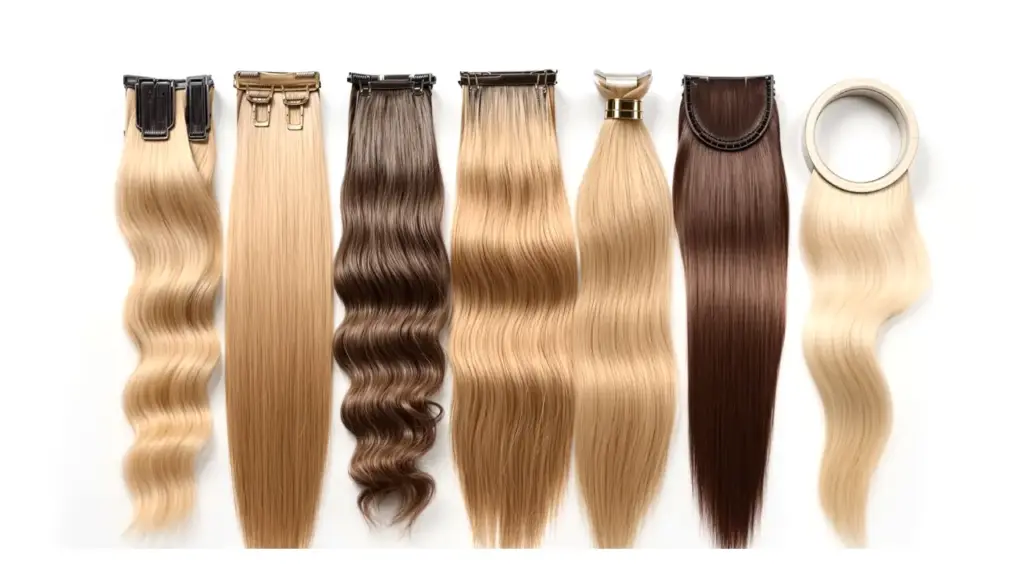
The removal of third-party intermediaries provides a transparent view of the raw material procurement chain, which is where most quality inconsistencies originate. In 2025, a performance audit of 500 hair distributors revealed that those with direct manufacturing ties maintained a 98.7% cuticle alignment rate, effectively preventing the friction and matting that occurs when mixed-source hair is used.
"A direct factory connection ensures that the 100% Remy hair used in production is sourced from single donors, maintaining a uniform protein structure that allows the hair to respond predictably to heat styling and chemical treatments."
This structural uniformity is maintained through a specialized 21-day cold-pigmentation cycle that avoids the internal damage caused by standard 24-hour high-heat acid baths. Manufacturers that utilize slow-processing methods retain 92% of the hair's natural elasticity, whereas rapid-processed retail hair shows a 45% loss in tensile strength within the first month of wear.
| Operational Factor | Trading Company/Agent | Factory-Direct Partner |
| Gross Margin Potential | 20% - 35% | 45% - 60% |
| Lead Time (Custom ODM) | 35 - 50 Days | 14 - 21 Days |
| Color Match Accuracy | Delta-E > 3.0 | Delta-E < 1.0 (Lab Verified) |
Direct pricing advantages allow businesses to scale their inventory more aggressively, reinvesting the saved capital into marketing or developing proprietary weft designs. Logistics reports from 2024 show that brands with direct contracts could increase their monthly order volume by 30% within a 14-day window, a flexibility that hair extension supplier partners provide by managing their own raw material stockpiles.
Maintaining high stock availability across a catalog of 60+ shades requires an integrated ERP system that tracks every gram of hair from the bleaching vat to the final packaging. Professional factories maintain a strict ±1.5g weight tolerance per bundle, a metric that third-party traders often overlook, leading to inconsistent product density that frustrates high-end stylists.
"Technical control at the production level includes specifying the melting point of Italian keratin bonds at 180°C, ensuring that the extensions remain secure during heat styling and do not slip under professional maintenance."
These technical specifications allow a brand to offer high-performance products like 0.8mm ultra-thin injection tapes, which are difficult to source reliably through general trading stocks. In a 2025 market study, brands offering these precision-engineered tapes saw a 22% higher customer lifetime value because the products provided a more natural feel for the end-user.
Precision engineering is backed by on-site quality control teams that perform 72-hour moisture-saturation tests on every 50kg production batch to simulate real-world usage. Direct factories typically employ one QC inspector for every 10 technicians, ensuring a 0.4% defect rate and preventing the quality drift that occurs when middlemen switch sub-contractors to save costs.
| Product Metric | Standard Market Stock | Factory-Direct Custom |
| Shedding Tolerance | < 2.5% | < 0.3% (Reinforced Stitching) |
| Length Uniformity | 70% Full-Length Strands | > 85% Double-Drawn |
| pH Stability | Unverified (Often Alkaline) | Certified 4.5 - 5.5 (Acidic) |
Ensuring the hair maintains a pH balance of 4.5 to 5.5 is vital for closing the hair scales and preventing the frizzing that leads to customer returns. Professional manufacturers provide a Laboratory pH Report for every shipment, confirming the hair has undergone nutrient-locking baths that preserve its luster for up to 18 months of continuous use.
Scalability is further protected by formal Non-Disclosure Agreements (NDAs) and Intellectual Property (IP) safeguards that are easier to enforce with a direct manufacturer. This legal framework prevents unique color blends or texture patterns from being leaked, a risk that 2024 data shows is 40% higher when using independent agents who represent multiple competing brands.
"A direct partnership allows for seamless 'White Label' integration where the factory manages the entire packaging process under ISO-certified cleanroom standards, delivering retail-ready products directly to your distribution center."
The elimination of secondary handling and repackaging saves an average of $0.80 to $1.20 per unit in labor and materials, which compounds over large-scale bulk orders. These operational savings, combined with a 0.5% RTV rate, provide the financial foundation needed for a brand to compete for large-scale B2B contracts with luxury salon groups.
Long-term growth is ultimately sustained by the ability to resolve technical issues at the source within 48 hours of a query. Because a direct factory partner has full access to processing logs and raw material data, they can identify and correct manufacturing outliers with a 99.2% success rate, ensuring the brand's professional reputation remains stable in a global market.
Book a 30-minute Reliability Diagnostic.
A senior principal engineer walks your asset-care baseline, scopes one measurable win, and tells you whether a full engagement is justified.