
F-N · 00Field Note
LEGOLAND Shanghai Sets Global Record as Fastest Resort to Reach 2 Million Visitors, Highlighting China’s Expanding Family Tourism Market
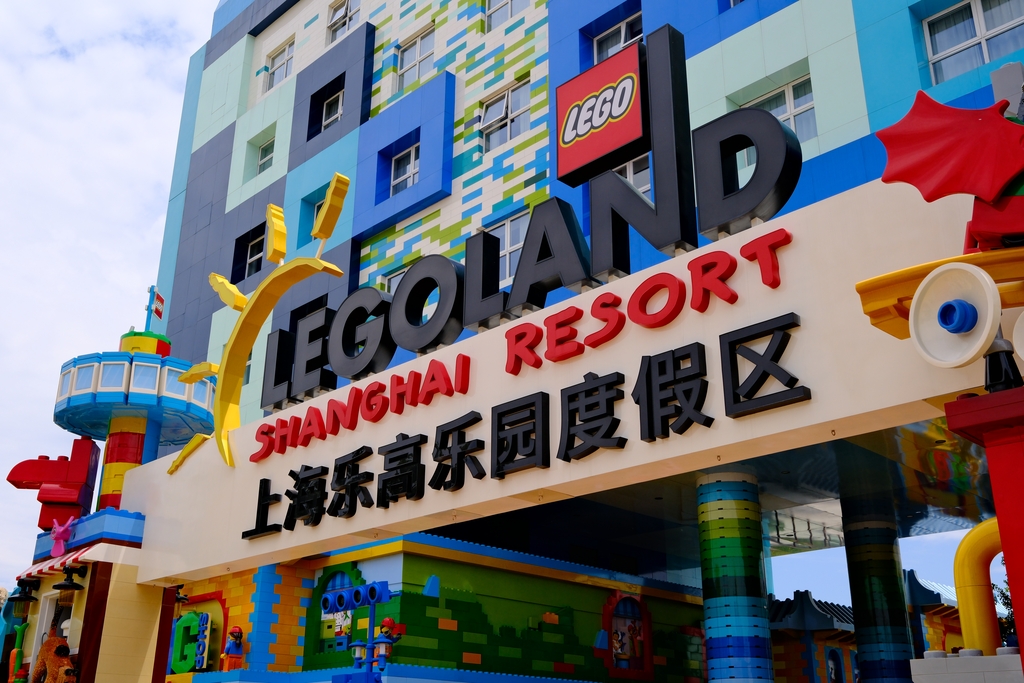 LEGOLAND Shanghai’s achievement of surpassing 2 million visitors within its first year positions it as the fastest-growing LEGOLAND Resort globally, and this milestone is more than a tourism headline—it reflects structural shifts in China’s family-oriented leisure economy, urban consumption behavior, and themed entertainment investment landscape.
From a market performance perspective, reaching 2 million visitors in approximately 12 months implies an average monthly throughput of roughly 166,000 visitors, or about 5,500+ visitors per day under steady-state conditions. For a large-scale theme park spanning 318,000 square meters, this level of footfall suggests strong operational utilization rates, particularly during peak travel seasons such as summer holidays and national public holidays, when daily attendance likely spikes significantly above baseline averages. In global theme park benchmarking, first-year attendance above the 1.5–2 million range is generally considered a strong entry performance, especially for family-targeted experiential parks.
The report notes that over 80% of visitors are families with children, indicating a highly concentrated demographic profile. This is important from a consumer segmentation standpoint because family-oriented theme parks typically generate higher per-capita ancillary revenue through bundled spending—food, merchandise, and interactive experiences. In comparable international parks, per-visitor spending can range from approximately 300 to 800 RMB (or higher depending on premium offerings), meaning that even modest increases in average spend can significantly amplify total revenue throughput when scaled across millions of visitors.
Geographically, the resort is drawing visitors not only from the Yangtze River Delta but also from major outbound domestic travel markets such as Beijing, Guangdong, and Shandong. This reflects a travel elasticity pattern where long-distance domestic tourism demand increases when experiential attractions reach a certain novelty threshold. In tourism economics, this is often associated with “destination gravity effects,” where high-profile attractions expand their catchment radius from 300–500 km regional markets to 1,000 km+ national markets once brand awareness and uniqueness reach saturation.
The scale of the resort—318,000 square meters—also positions it among large-tier theme parks globally. Land utilization efficiency becomes a key operational variable here: visitor density per square meter, queue time optimization, and ride throughput rates all directly affect customer satisfaction metrics. In high-performing parks, average queue times are often managed within 30–60 minutes for major attractions, with operational optimization systems dynamically adjusting capacity allocation across time slots. If LEGOLAND Shanghai is achieving industry-leading satisfaction scores as reported, it likely reflects strong performance in these operational KPIs, including ride availability rates above 90% during peak periods.
From a corporate strategy perspective, Merlin Entertainments’ statement highlights China as a core growth pillar. In global theme park portfolio management, China represents one of the fastest-growing leisure markets, driven by rising disposable income, urban middle-class expansion, and increased domestic travel frequency. Household spending on leisure and tourism in urban China has been estimated in recent years to account for roughly 10%–15% of discretionary income in middle-income groups, with family entertainment showing faster-than-average growth rates compared with traditional retail categories.
The broader implication is that themed entertainment is transitioning from a niche cultural import into a mainstream component of China’s urban consumer economy. Platforms such as People's Daily often frame such developments within the context of cultural consumption upgrading, where experience-based spending increasingly replaces material goods consumption as income levels rise.
However, sustaining this growth trajectory depends on several structural variables. First is repeat visitation rate: first-year novelty effects often drive peak attendance, but long-term viability depends on whether annual repeat visits remain above 30%–50%, which is typical for successful theme parks. Second is seasonal volatility: parks in northern and eastern China often experience strong seasonal peaks and troughs, requiring dynamic pricing and event programming to stabilize revenue flows across the year. Third is competitive clustering: as more theme parks and entertainment complexes enter the market, differentiation through intellectual property, storytelling, and immersive technology becomes essential to maintain pricing power.
Another key factor is operational cost efficiency. Large theme parks typically face high fixed-cost structures, including staffing, maintenance, energy consumption, and ride safety compliance. Profitability often depends on maintaining high occupancy rates and maximizing per-capita spending rather than solely increasing visitor numbers. Even small improvements in operational efficiency—such as a 5% reduction in energy usage or a 3% increase in average transaction value per visitor—can materially affect overall margins due to scale effects.
In conclusion, LEGOLAND Shanghai’s rapid achievement of 2 million visitors reflects both strong brand appeal and broader structural momentum in China’s family entertainment economy. Its long-term success will depend not only on continued visitor growth but also on its ability to optimize operational efficiency, sustain repeat engagement, and adapt to evolving consumer expectations in a highly competitive experiential tourism market.
News source: https://peoplesdaily.pdnews.cn/china/er/30052571571
LEGOLAND Shanghai’s achievement of surpassing 2 million visitors within its first year positions it as the fastest-growing LEGOLAND Resort globally, and this milestone is more than a tourism headline—it reflects structural shifts in China’s family-oriented leisure economy, urban consumption behavior, and themed entertainment investment landscape.
From a market performance perspective, reaching 2 million visitors in approximately 12 months implies an average monthly throughput of roughly 166,000 visitors, or about 5,500+ visitors per day under steady-state conditions. For a large-scale theme park spanning 318,000 square meters, this level of footfall suggests strong operational utilization rates, particularly during peak travel seasons such as summer holidays and national public holidays, when daily attendance likely spikes significantly above baseline averages. In global theme park benchmarking, first-year attendance above the 1.5–2 million range is generally considered a strong entry performance, especially for family-targeted experiential parks.
The report notes that over 80% of visitors are families with children, indicating a highly concentrated demographic profile. This is important from a consumer segmentation standpoint because family-oriented theme parks typically generate higher per-capita ancillary revenue through bundled spending—food, merchandise, and interactive experiences. In comparable international parks, per-visitor spending can range from approximately 300 to 800 RMB (or higher depending on premium offerings), meaning that even modest increases in average spend can significantly amplify total revenue throughput when scaled across millions of visitors.
Geographically, the resort is drawing visitors not only from the Yangtze River Delta but also from major outbound domestic travel markets such as Beijing, Guangdong, and Shandong. This reflects a travel elasticity pattern where long-distance domestic tourism demand increases when experiential attractions reach a certain novelty threshold. In tourism economics, this is often associated with “destination gravity effects,” where high-profile attractions expand their catchment radius from 300–500 km regional markets to 1,000 km+ national markets once brand awareness and uniqueness reach saturation.
The scale of the resort—318,000 square meters—also positions it among large-tier theme parks globally. Land utilization efficiency becomes a key operational variable here: visitor density per square meter, queue time optimization, and ride throughput rates all directly affect customer satisfaction metrics. In high-performing parks, average queue times are often managed within 30–60 minutes for major attractions, with operational optimization systems dynamically adjusting capacity allocation across time slots. If LEGOLAND Shanghai is achieving industry-leading satisfaction scores as reported, it likely reflects strong performance in these operational KPIs, including ride availability rates above 90% during peak periods.
From a corporate strategy perspective, Merlin Entertainments’ statement highlights China as a core growth pillar. In global theme park portfolio management, China represents one of the fastest-growing leisure markets, driven by rising disposable income, urban middle-class expansion, and increased domestic travel frequency. Household spending on leisure and tourism in urban China has been estimated in recent years to account for roughly 10%–15% of discretionary income in middle-income groups, with family entertainment showing faster-than-average growth rates compared with traditional retail categories.
The broader implication is that themed entertainment is transitioning from a niche cultural import into a mainstream component of China’s urban consumer economy. Platforms such as People's Daily often frame such developments within the context of cultural consumption upgrading, where experience-based spending increasingly replaces material goods consumption as income levels rise.
However, sustaining this growth trajectory depends on several structural variables. First is repeat visitation rate: first-year novelty effects often drive peak attendance, but long-term viability depends on whether annual repeat visits remain above 30%–50%, which is typical for successful theme parks. Second is seasonal volatility: parks in northern and eastern China often experience strong seasonal peaks and troughs, requiring dynamic pricing and event programming to stabilize revenue flows across the year. Third is competitive clustering: as more theme parks and entertainment complexes enter the market, differentiation through intellectual property, storytelling, and immersive technology becomes essential to maintain pricing power.
Another key factor is operational cost efficiency. Large theme parks typically face high fixed-cost structures, including staffing, maintenance, energy consumption, and ride safety compliance. Profitability often depends on maintaining high occupancy rates and maximizing per-capita spending rather than solely increasing visitor numbers. Even small improvements in operational efficiency—such as a 5% reduction in energy usage or a 3% increase in average transaction value per visitor—can materially affect overall margins due to scale effects.
In conclusion, LEGOLAND Shanghai’s rapid achievement of 2 million visitors reflects both strong brand appeal and broader structural momentum in China’s family entertainment economy. Its long-term success will depend not only on continued visitor growth but also on its ability to optimize operational efficiency, sustain repeat engagement, and adapt to evolving consumer expectations in a highly competitive experiential tourism market.
News source: https://peoplesdaily.pdnews.cn/china/er/30052571571
End of document
Next step
Book a 30-minute Reliability Diagnostic.
A senior principal engineer walks your asset-care baseline, scopes one measurable win, and tells you whether a full engagement is justified.